
What is silverplated metal
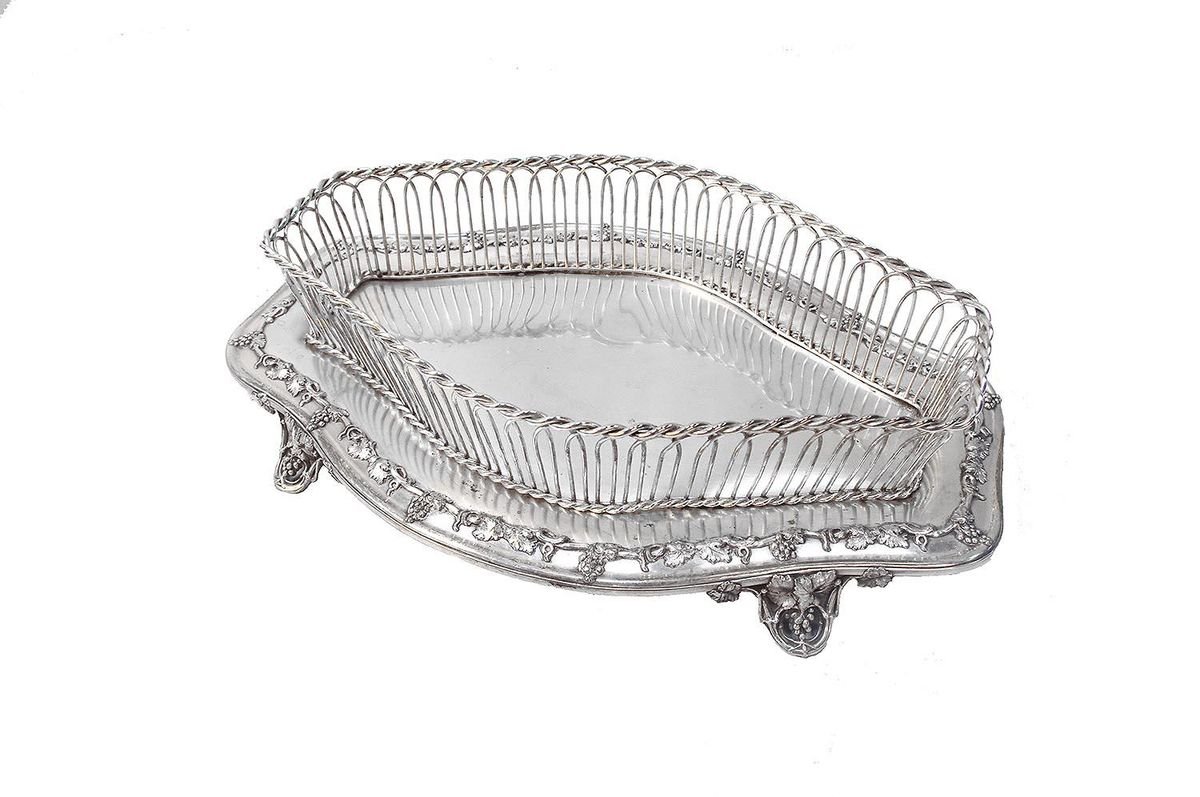 Despite the fact that at one time behind the creation of items made of silver-plated metal was the idea of silver "analogue" with the preservation of most of its properties (you can read more about the properties of silver in our article), subsequently silverplated metal items became collectibles and grew both in value and price.
So what is it? Put it simple, this is an item made of metal and covered with a thin layer of silver. As a result, we get a product that is very similar to silver, but at a lower price.

The silver plating process known as “Sheffield plate” was invented in 1743 by Thomas Bowlsover, worker of "Sheffield's Cutlers Company". While repairing the silver handle of a knife, he accidentally heated it too much and the silver began to melt. Upon examining the damage, Bowlsover discovered that the copper and silver had fused strongly, and further experiments showed that while attempting to change the shape of the alloy, the two metals behaved as one. With involved funds and after founding own company, Thomas Bowlsover perfected the technology. A metal layer was coated with a thin layer of silver on top and a thick layer of copper on the bottom.
In 1840, the Sheffield plate technology was replaced by electroplating, invented and patented by George Elkington (more about his company Elkington & Co. you can read in our article). Electricity was applied to put a very thin layer of silver on metal. Although after 1840's Bowlsover's technology was almost never used, "hybrid" items (such as sugar bowls) where the body was silver-plated with the “Sheffield plate” technology, and a silver layer was applied to smaller parts by electroplating appeared in 1850-1860s. However, these things are extremely rare and hard to distinguish.
In the Victorian era, the demand for silver household items was high, so manufacturers (both silversmiths and those aimed only at silverplated metal) massively created silver.plated items that looked like silver, so, now "silver" could be afforded by broader segments of the population ...
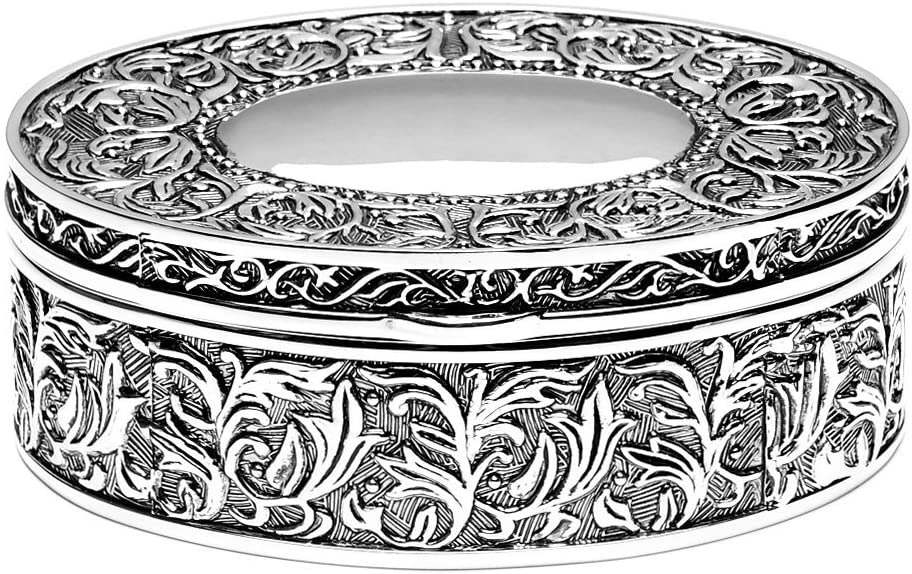
The rules for hallmarks on silverplated metal vary in different countries, but there is a common feature: they are not as strict as for silver.
The collection of our gallery contains many lots of silver-plated metal (see "Catalog - Silverplated metal" tab).
Topázio

Topázio is a renowned Portuguese manufacturer of silver, silverplated and gold items.
In 1874, Manuel José Ferreira Márquez founded the Ferreira Marques & Irmão workshop in Porto, the second largest city in Portugal. Initially, the company was engaged in small jewelry, but in the 1920s expanded its assortment with large silver items.
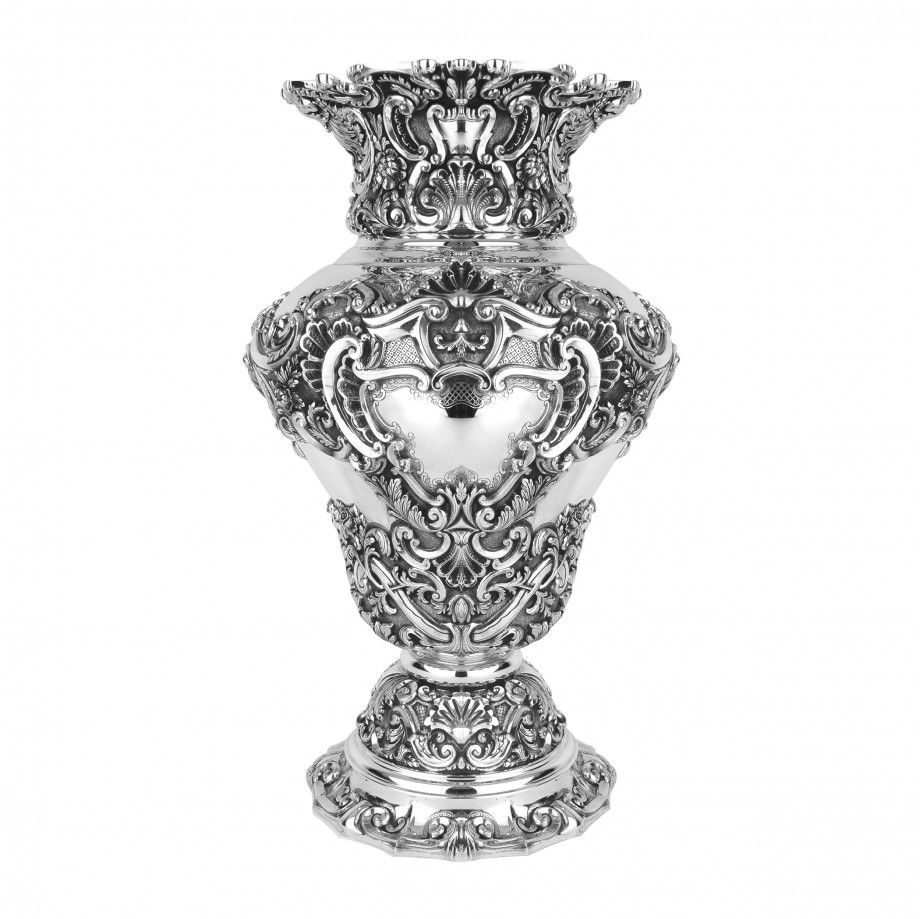 After the death of the founder, Manuel José Ferreira Márquez, his sons, Gabriel and Sylvester Ferreira, inherited the workshop.Then tremendous changes began. First of all, they renamed the company to Topázio (in honor of their mother's favorite stone - topaz). Sons focused on large silverware and in the 1940s created the D. João V vase, their “calling card” (named after the Portuguese king, João V), as a whole line of similarly styled products later emerged under the name D. João V. In 1970, the company began to produce silverplated metal products.
Topázio gained international recognition after participating in the Hannover Messe, a world industrial fair that has been held since 1947 in the German city of Hannover.
In 2014, Topázio celebrated its 140th anniversary and in 2015 launched a new line of brass products - Citrino.
The Watel Antik gallery features a silverplated planter with glass inlay from the Topázio workshop.


