
"Napoleon and Warlords" collection by Scheibe Alsbach
 The period between 1804-1815, from the proclamation of Napoleon Bonaparte as Emperor of France until his overthrow, is known in the history of France as the First Empire. At the same time, the invincible "Great Army", "La Grande Armée", was formed. It was led by talented military leaders. Despite the fact that after the Great French Revolution the old military ranks such as marshal or general were abolished, Napoleon resumed them and, like in the days of the monarchy overthrown by the revolutionaries, assigned them by himself. Nevertheless, the new emperor granted those titles not nobles, but, unlike his predecessors, well-known strategists, tacticians, diplomats, warriors without aristocratic origin. True, later Napoleon gave them titles of nobility ...
And even after the complete overthrow of Napoleon Bonaparte, artists paid tribute to him, his deeds and his people in various forms, including porcelain.
An outstanding example is the Thuringian manufacture Scheibe-Alsbach. You can learn about the manufacture from our article about German porcelain. Here we will talk about one of the most famous and collectible series.
The manufacture has been specializing in celebrities' porcelain figures since the second half of the XIX century. Designs, dedicated to Napoleon, appeared in the manufacture's selection in 1890s. At first there were sculptures based on famous paintings: "Napoleon on a reared horse" (sculptor Otto Pörtzel based on the painting by Jean-Louis David "Napoleon at the Saint Bernard Pass"), "Napoleon in Russia" (several sculptures by Felix Zeh), "Sleeping at the table" (as on lithographs by Ange-Louis Janet) etc. Another series, popular among collectors, is the riders of the Imperial Army.
The collection presented by the Watel Antik gallery, loved by admirers and reissued more than once in a limited edition, is called "Napoleon and his Warlords". The main author and sculptor of the series is Felix Zeh.
A successful and talented graduate of the Art School in Sonnenberg. From 1888 until his death in 1937 he worked at the Scheibe Alsbach manufactory, where he was one of the most demanded masters. In addition to historical motives, he created sculptures in the Rococo and Biedermeier styles. By 1904, to the 100th anniversary of the First Empire, Zeh and another sculptor of the manufactory, Carl Lyseh, prepared a collection of life-size figures of Napoleon and a number of his military leaders, including 12 marshals (Jean Lannes, Auguste-Frederic-Louis Marmont, Jean-Baptiste Bessière, Joachim Murat, André Massena, Edouard-Adolphe-Casimir Mortier, Michel Ney, Laurent de Gouvion Saint-Cyr, Louis-Nicolas Davout, Isidore Excelmans, Louis Gabrielle Suchet, François Etienne Christophe Kellerman and Guillaume Marie-Anne Brune), 9 generals ( Henri Gassien Bertrand, Jean Andoche Junot, Louis Lepic, Pierre Jacques Etienne Cambronne, Eugene Rose de Beauharnais, Armand Augustin Louis de Caulaincourt, Jean-Baptiste Klébert and Charles François Du Maurier) and the Marquis Gilbert La Fayette, a prominent political figure.
Since the series was further reissued, the design and assortment of sculptures varies, but the careful elaboration of details of uniforms and awards, along with a square pedestal with golden eagles, a symbol of Napoleonic France, in the corners remain unchanged. The names of the marshals and generals are embossed on the front, the years of life on the back, with a brief biographical note at the bottom.
The Watel Antik gallery presents you a collection of 14 figurines from the period 1962-1972, when the manufactory was under the control of East Germany, but had not yet been nationalized. Below are detailed historical descriptions and comments (you can familiarize yourself with marks on lot's page). This collection is sold in unique packaging made in our restoration studio Atelier Watel.
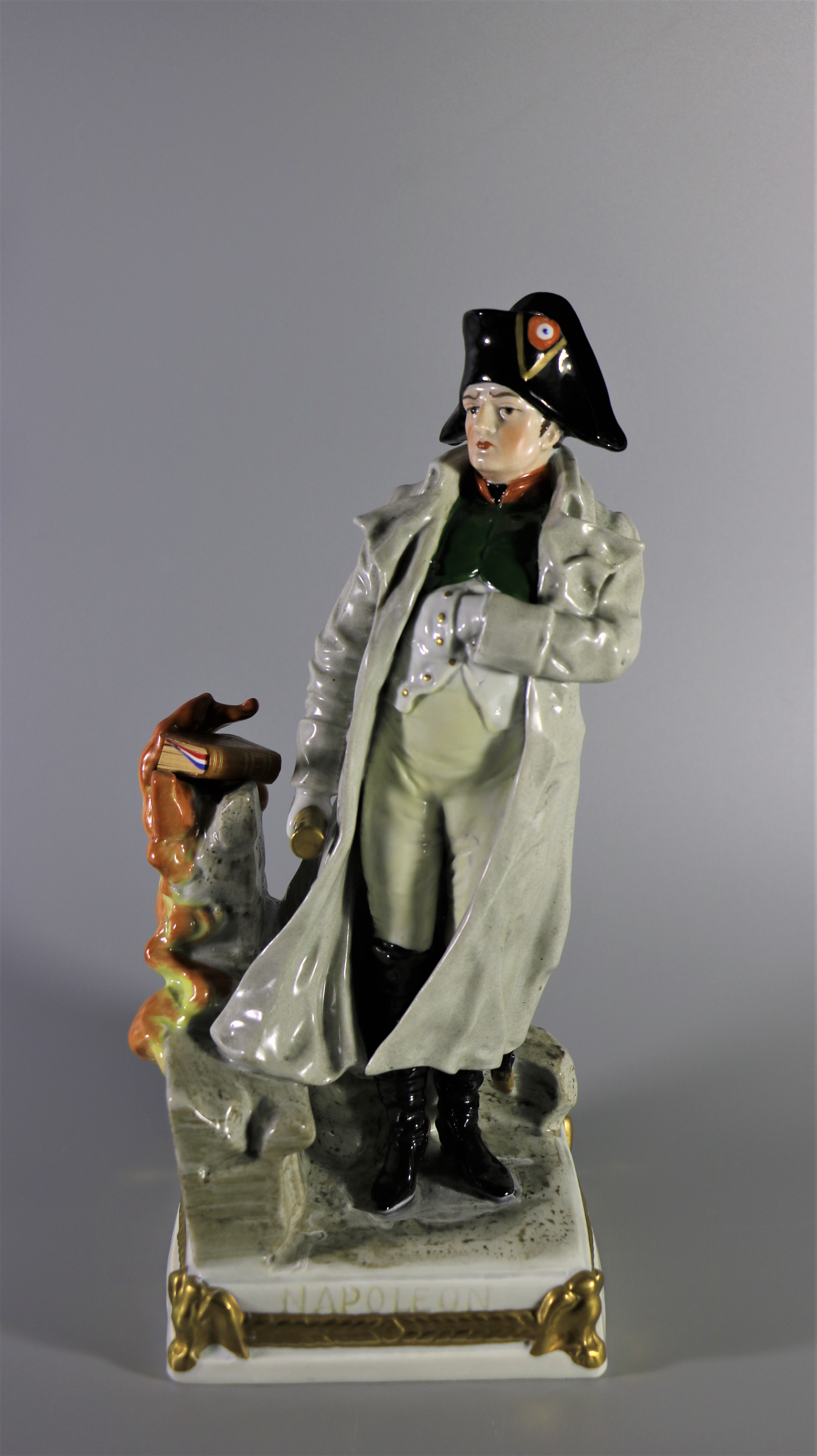
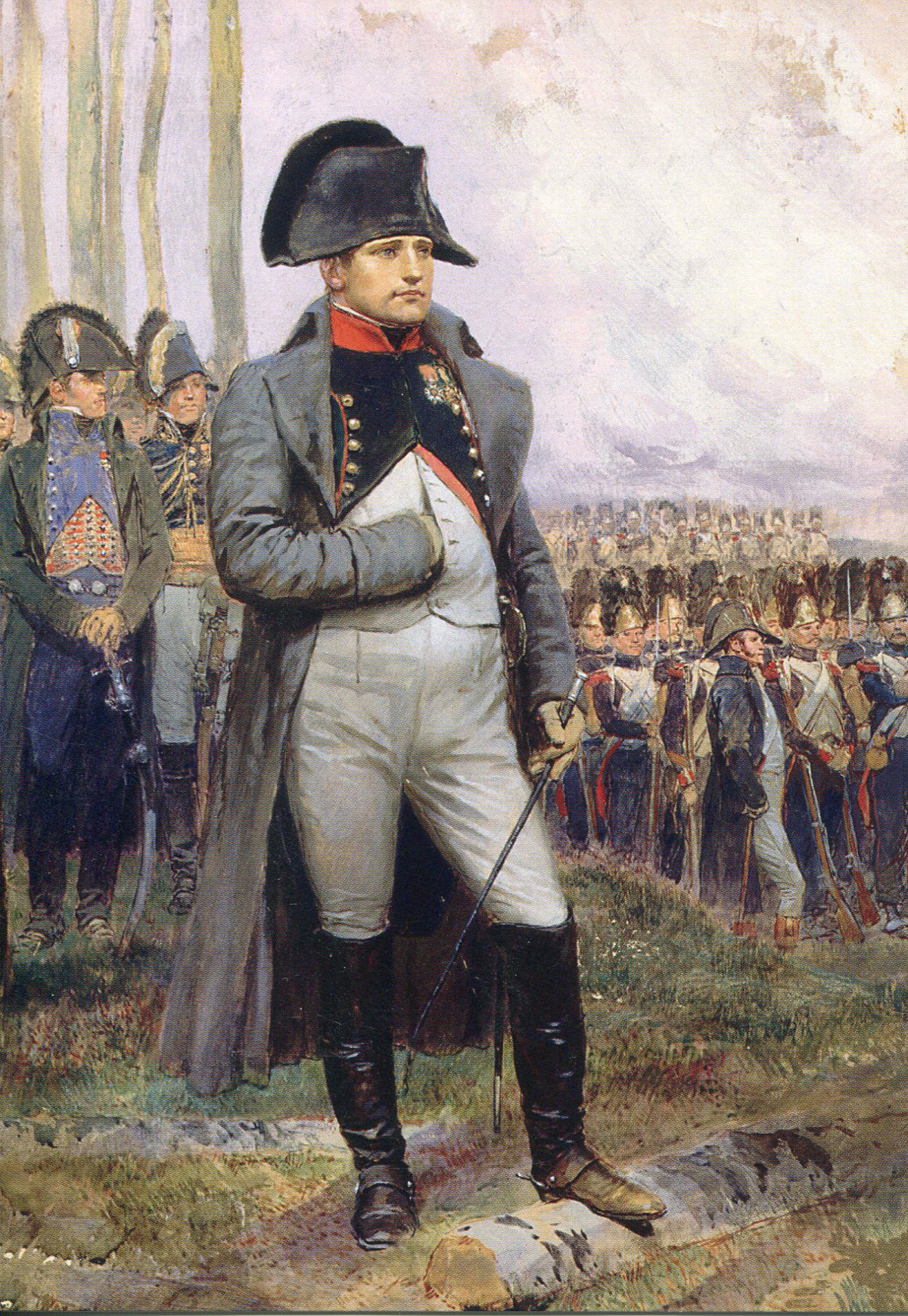 Napoleon Bonaparte (1769-1821)
Pedestal:
Napoleon (front)
A key figure in any sense. Regardless of the date of the series, it is depicted with a hand tucked into the lapel of the uniform (in our case, the left) and a telescope (in our case, in the right hand). However, our sculpture has an unusual composition: to the right of Napoleon there is a stone pedestal engulfed in flames, with a miniature copy of the Declaration of the Rights of Man and of the Citizen 1789, the most important document of the French Revolution, laying on it.
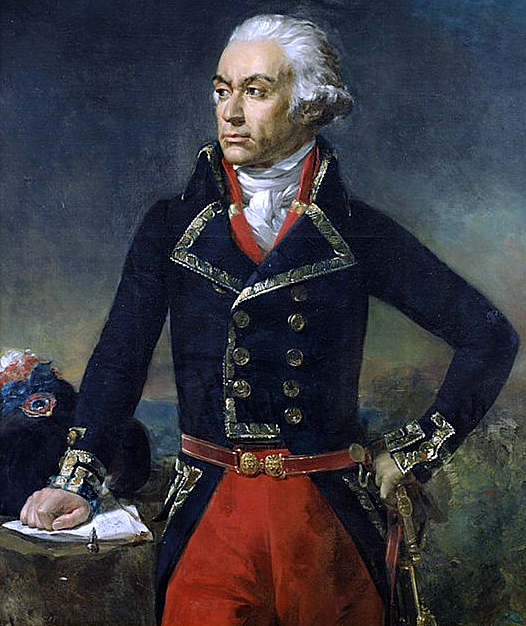
Charles Francois Dumouriez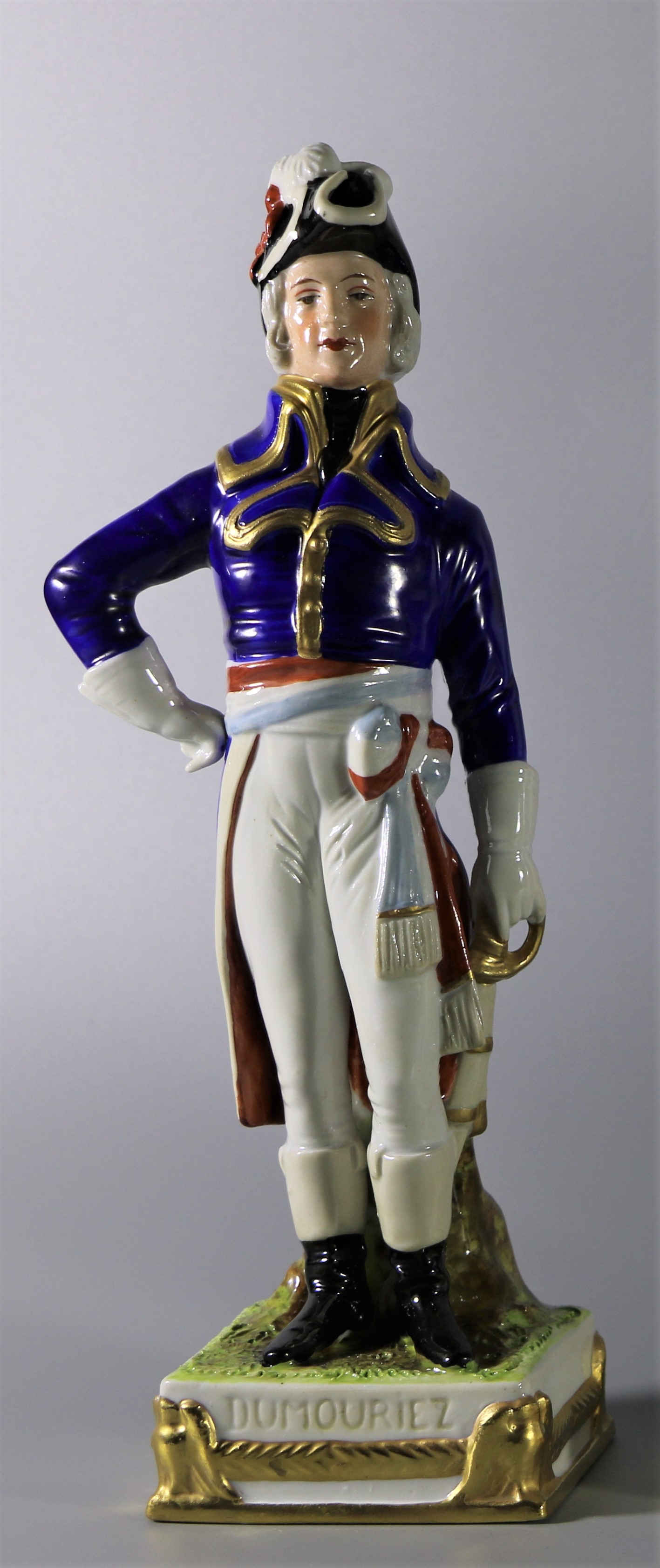
Pedestal:
Dumouriez (front)
1739-1823 (back)
Né à Cambrai - Avec Kellermann à Valmy le 20 Septembre. 1792 Jemmapes le 6 Novembre 1792. Conquit la Belgique, mourut 1823 (Born in Cambrai. Together with Kellermann participated in the Battle of Valmy on September 20, 1792. November 6, 1792 - Battle of Gemmape. He conquered Belgium, died in 1823)
General of Napoleon's army. He came from the family of a military official, from the age of 19 he took part in wars. He was distinguished by courage and adventurousness, offering his services to other armies. In 1792 he became Minister of Foreign Affairs, replaced Lafayette as commander-in-chief of the Northern Army. In the same year, thanks to his actions, Belgium was captured. In the 1800s, due to a series of his dubious actions, he was forced to wander around Europe, then settled in England, where he was awarded a pension of 25,000 francs.
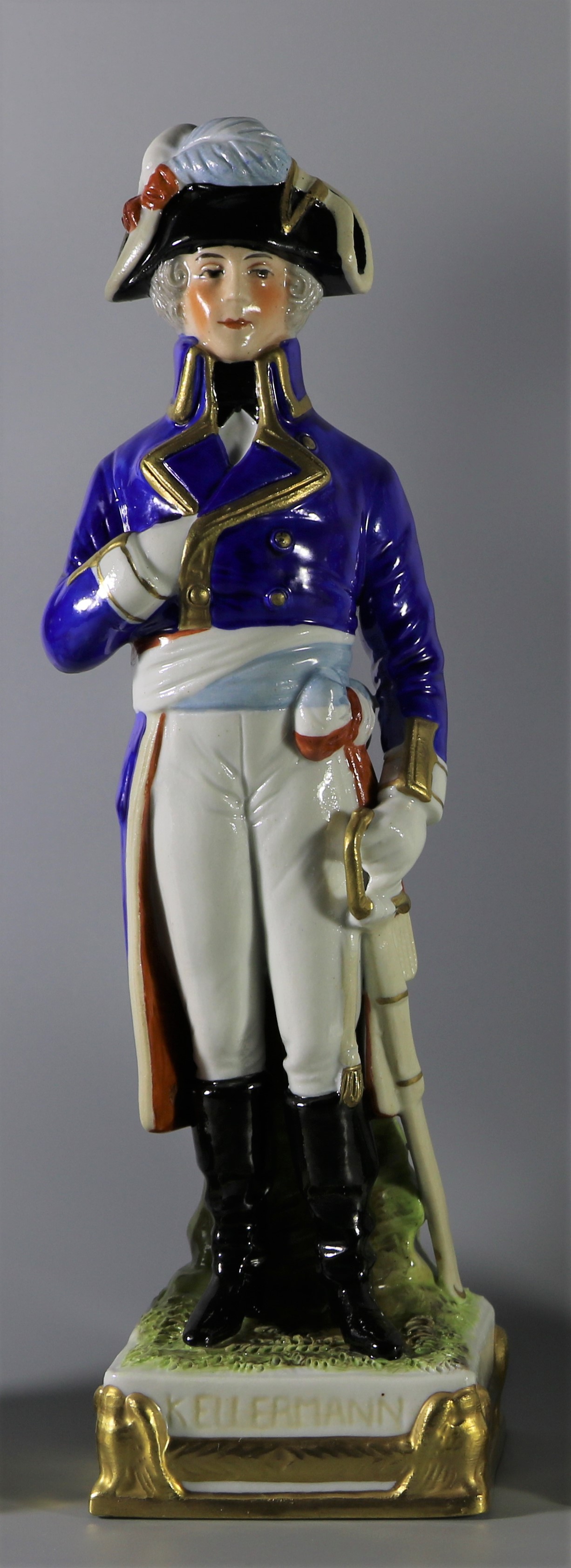
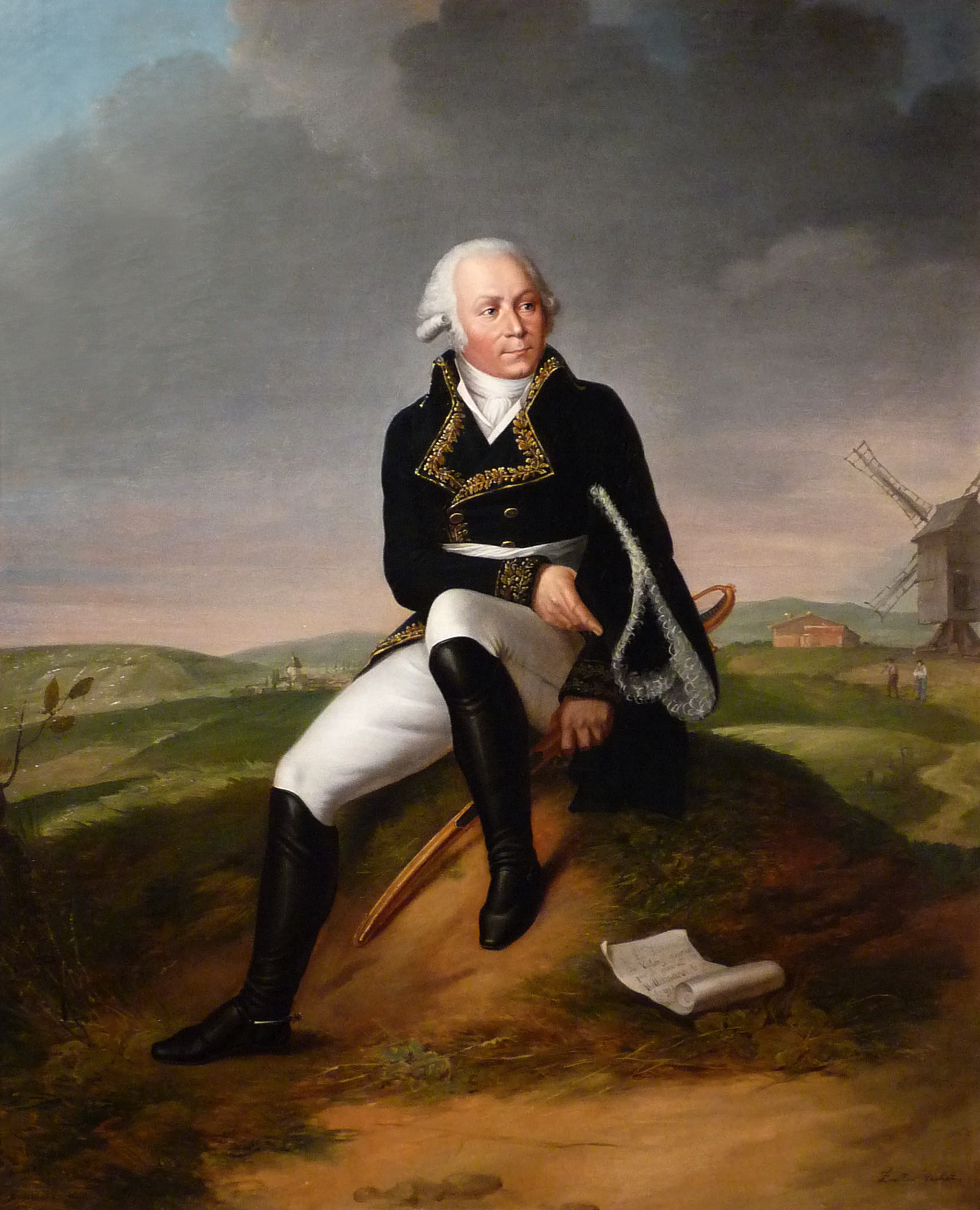 François Christoph Kellermann
Pedestal:
Kellermann (front)
1785-1879 (back)
Né à Strasbourgh - Général avec Dumourier à Valmy 1792. Maréchal de France et Duc de Valmy (Born in Strasbourg. General, together with Du Maurier participated in the Battle of Valmy in 1792. Marshal of France and Duke of Valmy)
In 1788 - General, in 1801 - President of the Senate. Since 1804 - Honorary Marshal and Duke of Valmy. In 1814 he was honoured as peer of the realm by Louis XVIII.
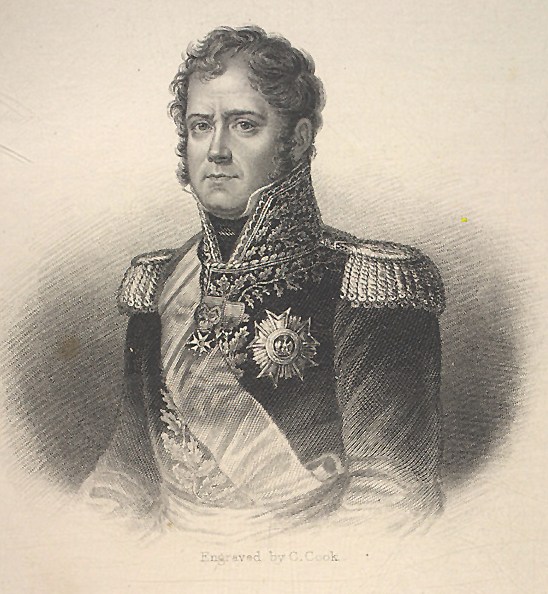
Michelle Ney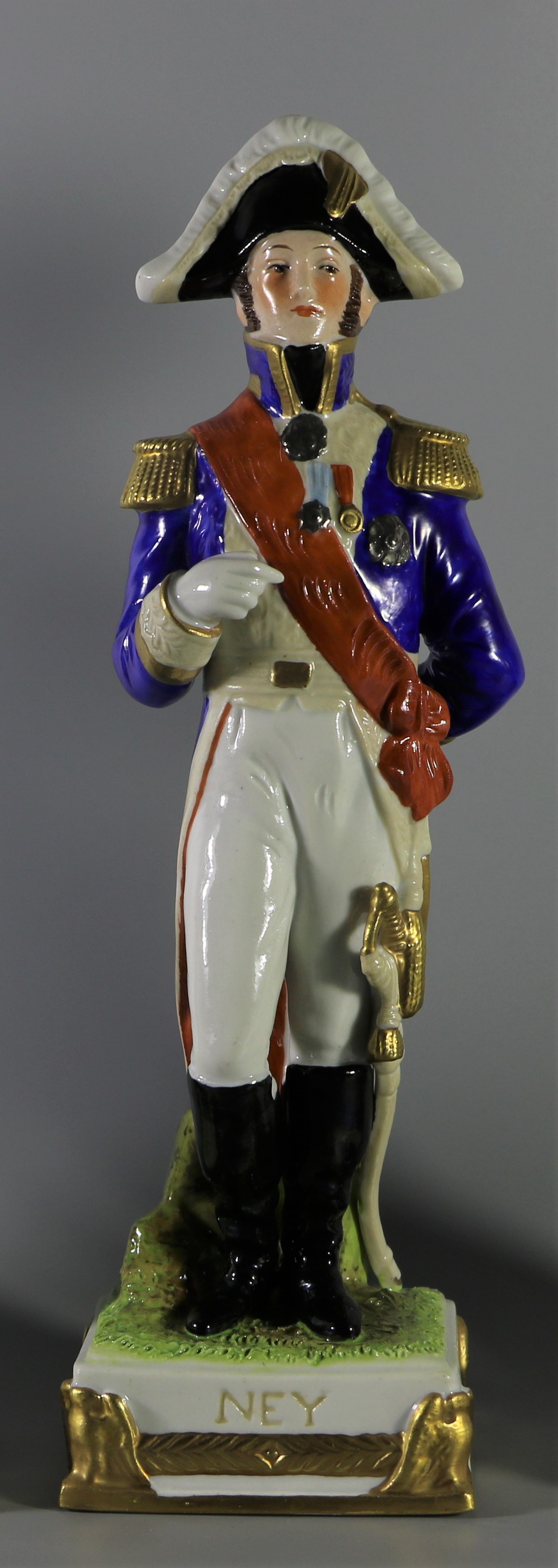
Pedestal:
Ney (front)
1769-1815 (back)
Né à Sarrelouis. Engage en 1787. Général 1799. Maréchal 1804. Duc d'Elchingen 1805. Espagne, 1806. Russie 1812. Prince de la Moskowa. Pair de France. Fusillé 1815 (Born in Sarrelui. In the army since 1787 General 1799 Marshal 1804 Duke Elchingen 1805 Campaign in Spain 1806 Russian campaign in 1812 Prince of Moscow. Peer of France. Execution in 1815)
"Le Brave des Braves", the bravest among brave of Napoleon. Born in the German-speaking enclave of Saarlouis in a family of a simple cooper. In the army since 1788, he took part in many battles against the Austrian Empire. In 1804 he received the marshal's baton and subsequently the titles of nobility. He took part in the battles of Elchingen, Ulm, Jena, fought in Spain, commanded a corps in the Russian campaign of 1812. After the capture of Paris and the abdication of Napoleon, he was appointed by King Louis XVIII as a peer of the realm, but in 1815 he took the side of Napoleon who had returned from Elba. On December 7, 1815 he was shot for treason.
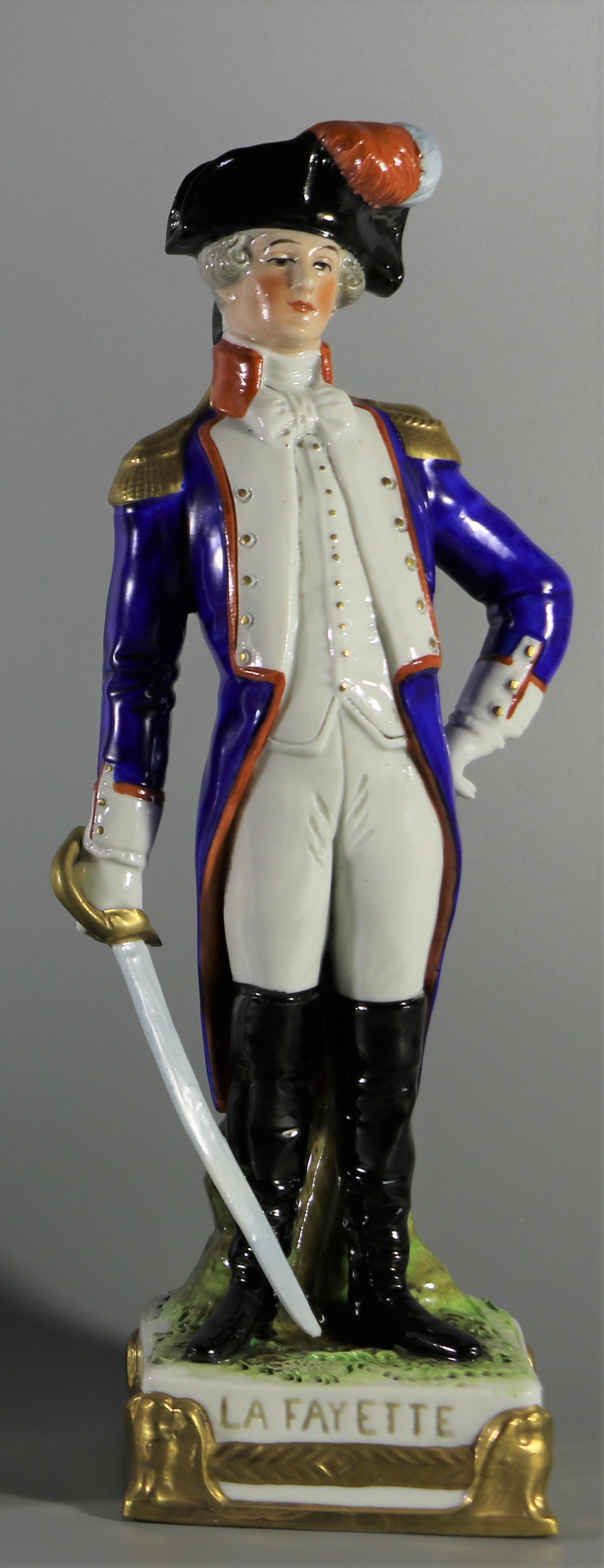
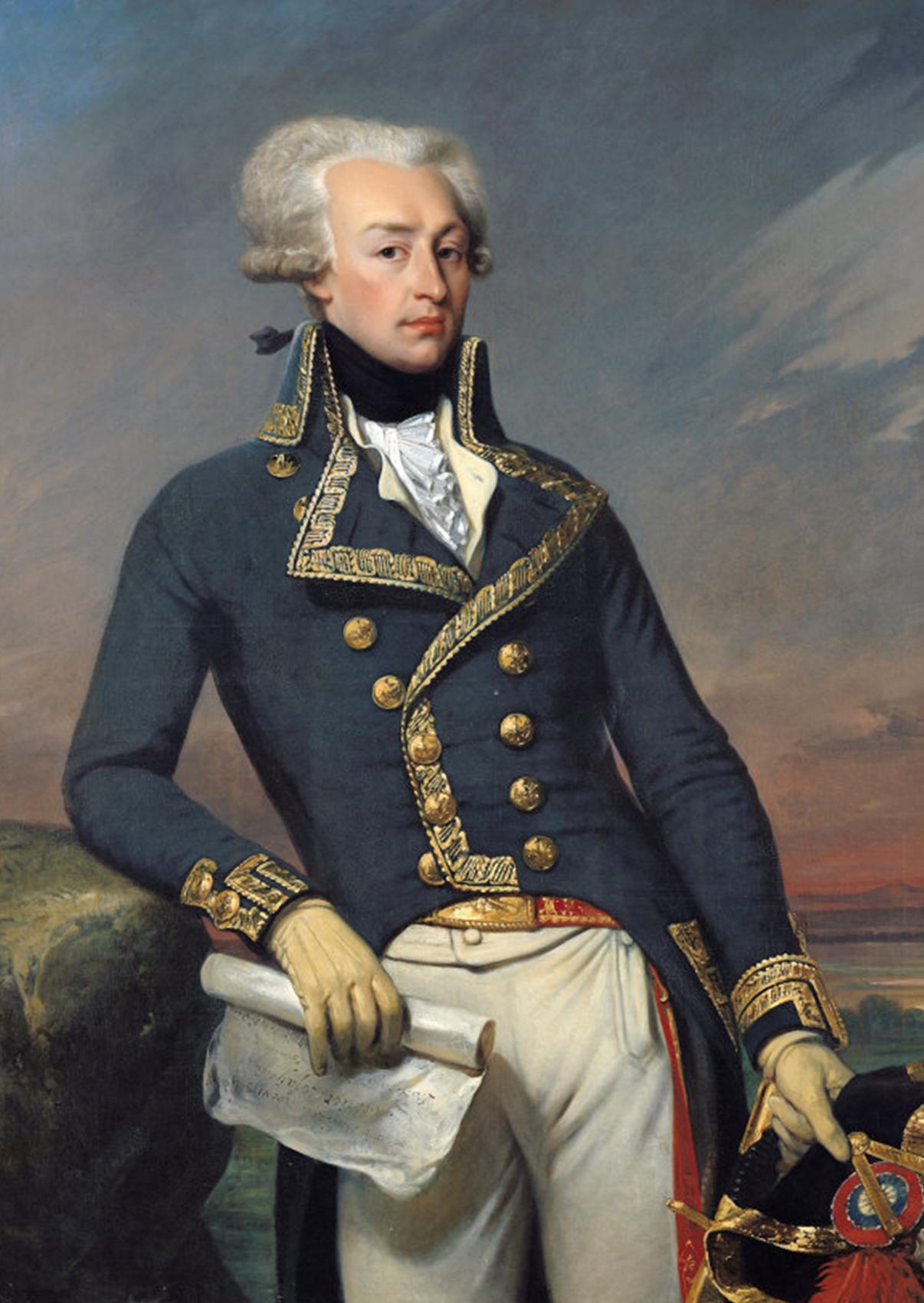 Gilbert Lafayette
Pedestal:
La Fayette (front)
1757-1834 (back)
Né à château de Chavagnac (Cantal). Servit en Amerique y devint Général. Garde Nationale 1789. Depute 1813. Chef du Gouvernement provisoire 1830 (Born in Château de Chavagnac (Cantal). He served in America, where he rose to the rank of general. In the French National Guard since 1789. Deputy in 1813 Head of the Provisional Government in 1830)
Came from a noble family, was one of the key participants in the American War of Independence, the Great French Revolution and the July Revolution of 1830. He participated in the most important events in world history of the XIX century.
It is worth noting that including the a figurine of this outstanding politician in the series "Napoleon and his commanders" was rather a tribute to Lafayette himself. At the time of the empire establishment in 1804, the politician, firstly, had already retired and, secondly, even opposed the authoritarianism of Napoleon Bonaparte.
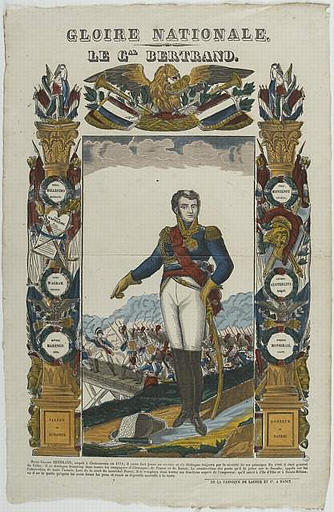
Henri-Gatien Bertrand
Pedestal:
Bertrand (front)
1773-1844 (back)
Né à Châteauroux. Garde National 1792. Egypte 1798. Général après Austerlitz, Wagram, suivit Napoléon a lile d'Elbe et a Ste-Hèlèna (Born in Chateauroux. In the National Guard since 1792 Egyptian campaign in 1798 General after Austerlitz, Wagram, following followed Napoleon to the island of Elba and the island of St. Helena)
The most loyal general to Napoleon, who followed him for better or worse. He was not only a warrior, but also a diplomat and intelligence officer: in 1797 he was a member of the embassy sent to Constantinople, and in 1805 he was sent on a reconnaissance mission to Bavaria. Was next to Napoleon in the Egyptian campaign. From 1807 he was a general, from 1808 - a count. After unsuccessfull "Hundred Days" of Napoleon, General Bertrand and his family followed his emperor into exile to Island of Saint Helena. But the fate of the general was more successful: in 1816 he was sentenced to death, but it was canceled in 1821. Until his death in 1844, Henri Gacien Bertrand was involved in politics.
_-_le_maréchal_lannes_(1769-1809)_1834.jpg) Jean Lannes
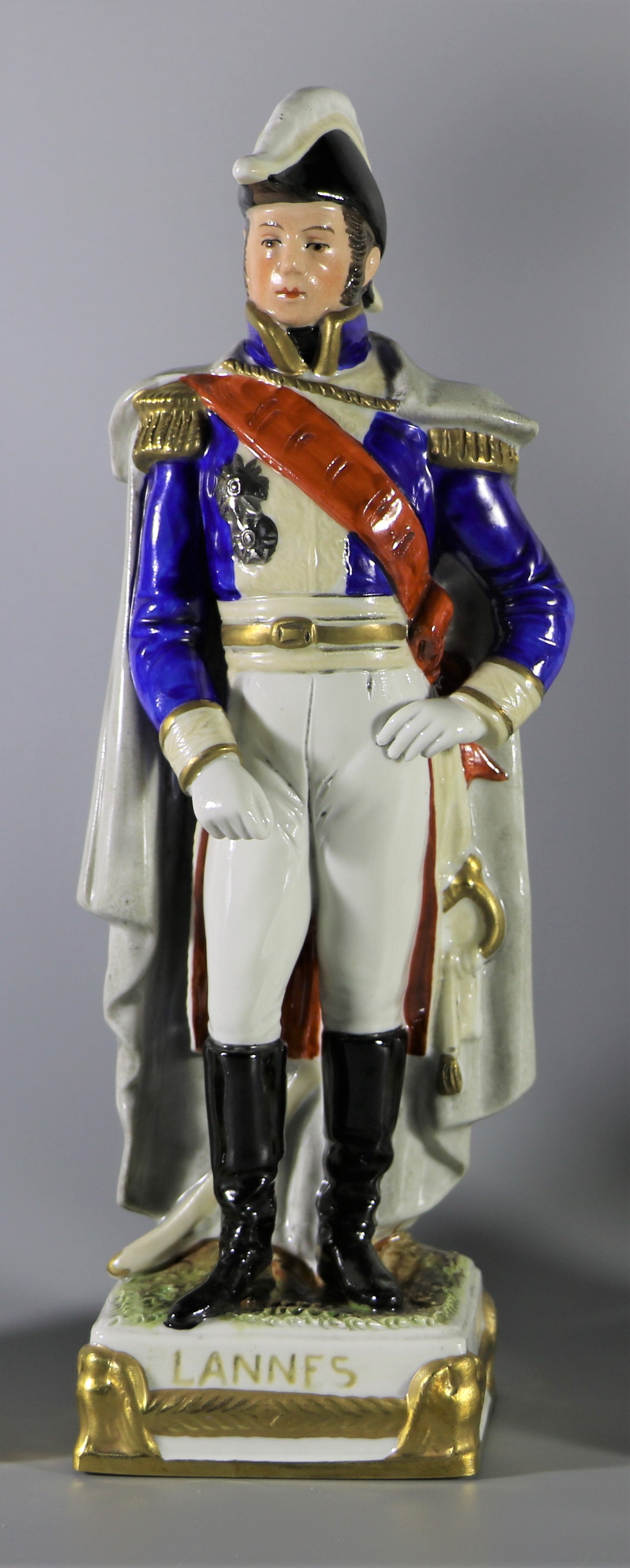
Jean Lannes
Pedestal:
Lannes (front)
1769-1809 (back)
Né à Lectoure. Egypte 1796. Coup d'Etat 16 Brumaire (1799). Maréchal et Duc de Montebelle 1804. Saragosse 1808. Tué le 22 Mai 1809 Essling (Born in Lectura. Egyptian campaign in 1796 Coup d'état 16 Brumaire (1799). Marshal and Duke of Montebel in 1804 Saragossa campaign 1808 . Killed on May 22, 1809 in Essling)
Marshal Lannes was compared with many epic heroes of Europe: Roland, an associate of Charlemagne, as well as the heroes of the Trojan War Ajax and Achilles. The son of a peasant volunteered for the army of the newly formed French Republic and was an active participant of wars against the coalition of European monarchies. He was noticed by Napoleon Bonaparte during the Italian campaign, where battalion commander Lannes saved Emperor's life twice. For 4 years he was the French ambassador to Portugal, where he sought to weaken the influence of England. He died after the Battle of Essling in 1809: both legs were crushed by a cannonball, one of them had to be amputated. However, a developed gangrene gave various complications.
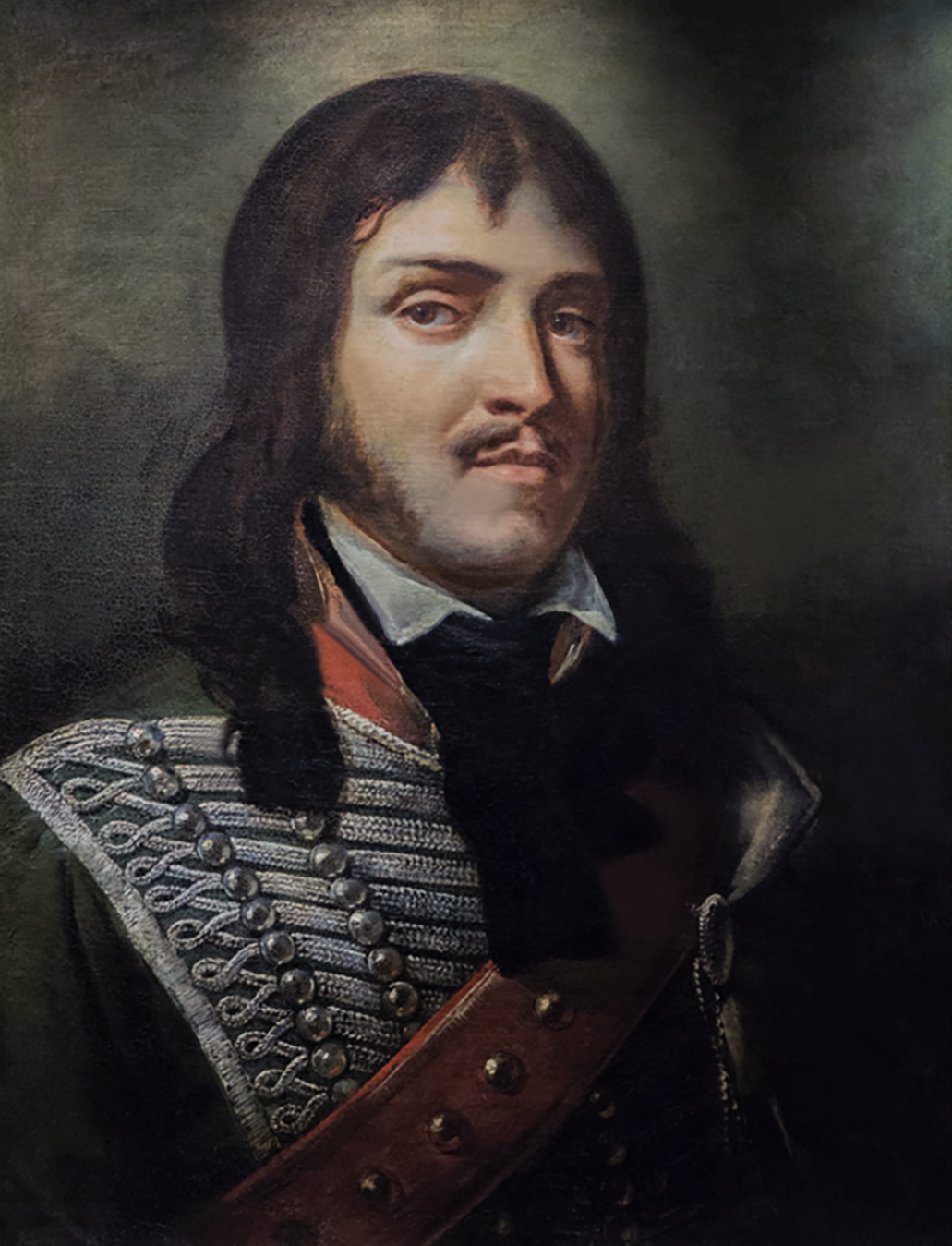
François Séverin Marceau-Degravier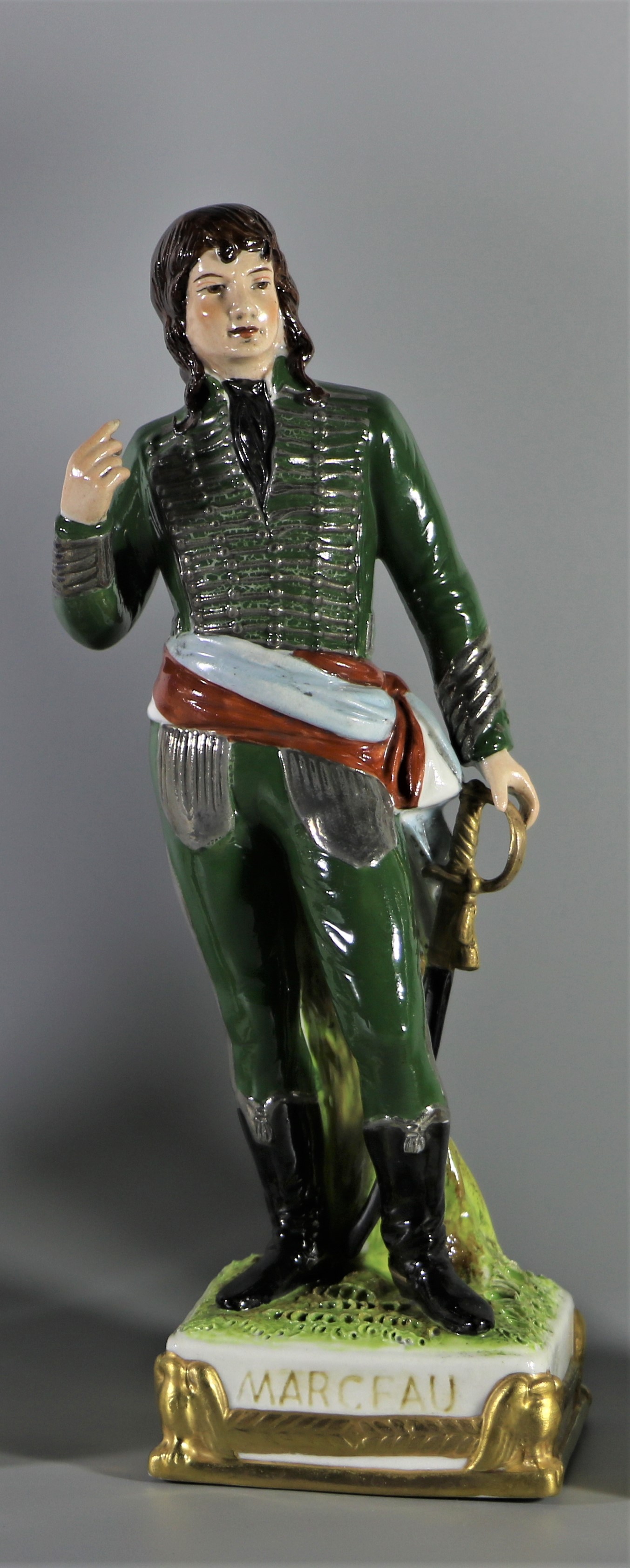
Pedestal:
Marceau (front)
Né à Chartres 1769, engagé à 15 ans. Sergent 1789. Général de Division campagnes de 1795 et 1796. Tué devant Altenkirchen 1796 (Born in Chartres in 1769, enlisted in the army at age 15. Sergeant in 1789 General of the division in the campaigns of 1795 and 1796. Killed at Altenkirchen in 1796)
Brief, brave, and glorious was his young career,—
His mourners were two hosts, his friends and foes;
And fitly may the stranger lingering here
Pray for his gallant spirit's bright repose
(J. Gordon Byron, Childe Harold's Pilgrimage)
Renowned general during the French Revolution. At the age of 16, he ran away from home to enlist in the army, was one of the storming of the Bastille. Together with Gilbert Lafayette, he participated in the defense of Verdun in 1792. In the battle of Gechstenbach he was mortally wounded. His colleagues were unable to break through to him through the Austrian army. The Austrians treated Marceau with respect and buried him in Coblentz.
The General Marceau-Degravier figurine is interesting for two reasons. Firstly, his figurine in this collection, like in case of Lafayette, is a tribute to the general himself. Secondly, the sculptor of this figurine was Heinz Schober from the Meissen Manufactory.
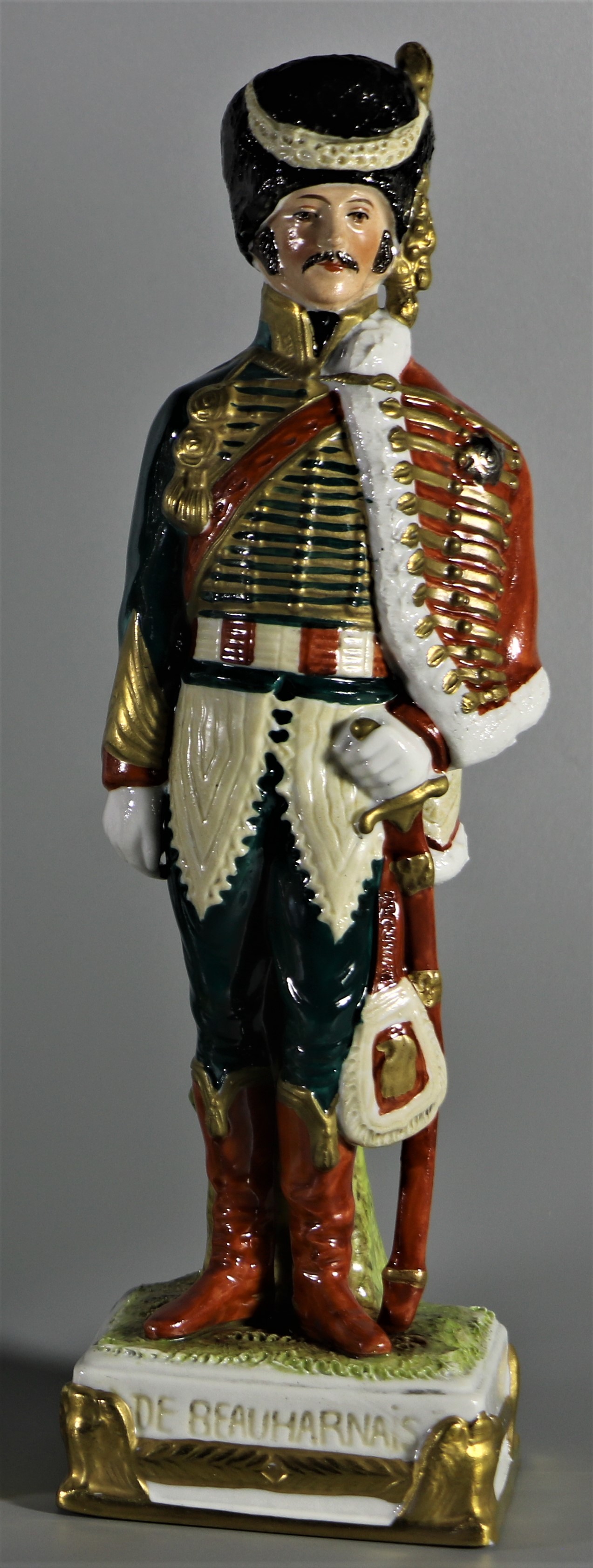
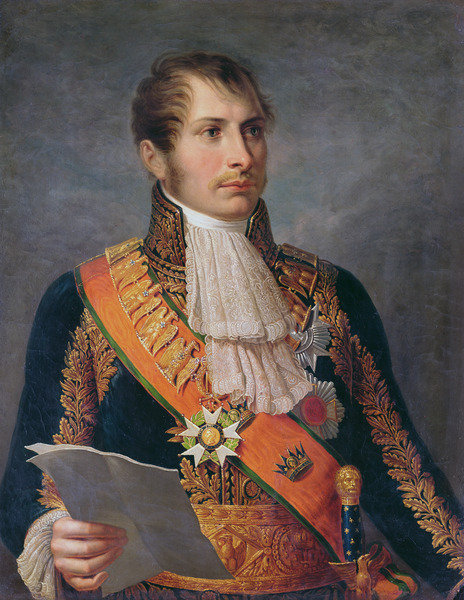 Eugene de Beauharnais
Pedestal:
De Beauharnais (front)
1781-1824 (back)
Né à Paris. Beau fils de l'Empereur. Lieutenant 1797. Egypte 1798. General de brigade 1800. Prince 1804. Vice-roi d'Italie 1805. Commando le 4me corps en Russie 1812 mouru Baviére 1824 (Born in Paris. Emperor’s stepson. Lieutenant in 1797 Egyptian campaign 1798. Brigadier General in 1800 Prince in 1804 Viceroy of Italy in 1805 Commander of the 4th corps during the Russian campaign of 1812 Died in Bavaria in 1824)
Son of Napoleon Bonaparte's beloved woman Josephine de Beauharnais and her first husband. The emperor adopted the young man after his marriage to his mother. In 1805 he bestowed Eugene the title of Prince of the French Empire and made him Viceroy of Italy. Despite the young age and kinship, he proved himself to be a good ruler and a brave warrior. Eugene de Beauharnais commanded the Italian troops, and also showed himself in the Russian campaign of 1812. After the fall of Napoleon, he abandoned Italian possessions for a substantial reward and moved to Bavaria, where he lived until his death in 1824.
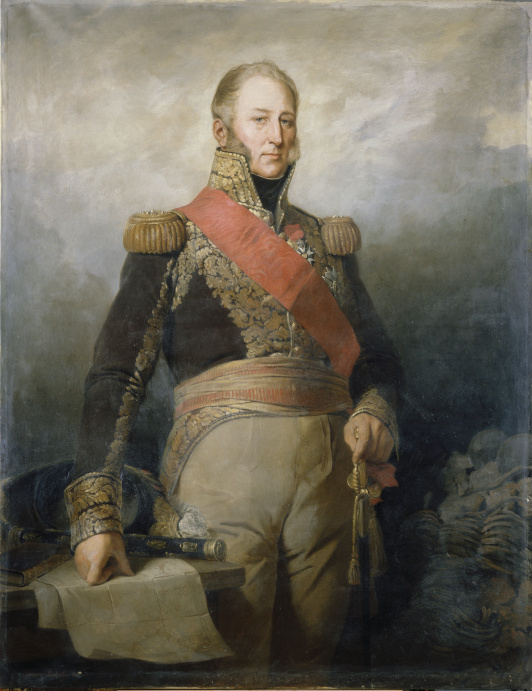
Edouard Adolphe Casimir Mortier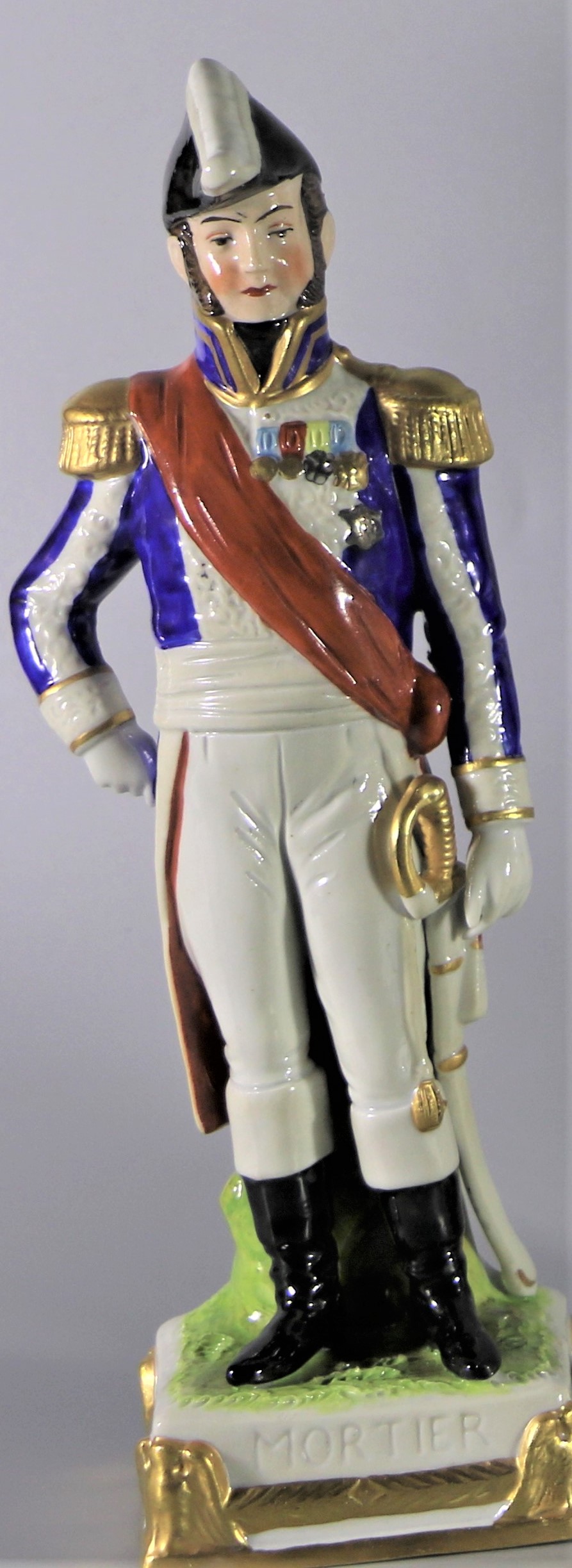
Pedestal:
Mortier (front)
1768-1835 (back)
Né au Cateau-Cambrésis. Engage 1791. Adjudant 1793. General 1799. Marechal 1804. Duc de Trevise 1807. Commando en Espagne 1809, en Russie 1812. Mouru victime de Fieschi (Born in Cato Cambresi. Recruited into the army in 1791. Adjutant in 1793 General in 1799 Marshal 1804. Duke of Treviso in 1807 Commander of campaigns in Spain 1809, in Russia 1812 Died as a result of the assassination attempt by Fieschi)
He was born in a family of a cloth merchant and received a decent education. He helped his father in the trade, but with the beginning of the French Revolution he enlisted in the army. Mortier showed himself more than once on the battlefield as a talented commander. In 1804, he was one of the first to receive the rank of marshal and then commanded the Imperial Guard, Bonaparte's elite troops. During the "Hundred Days" he joined Napoleon, but did not take part in hostilities. Since 1830 he was Ambassador to the Russian court. He was killed by the "infernal machine" developed by the Corsican adventurer Joseph Fieschi (a weapon or shell capable of inflicting numerous losses), during an attempt on the life of King Louis Philippe in 1835.
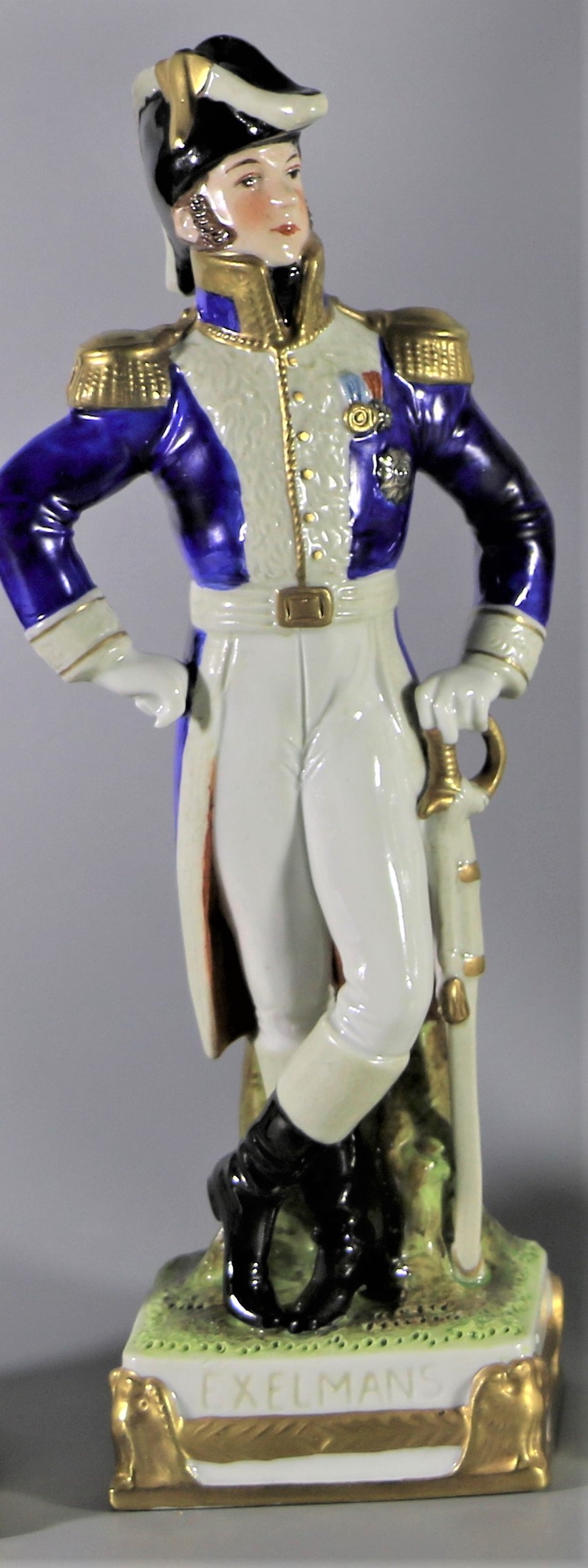
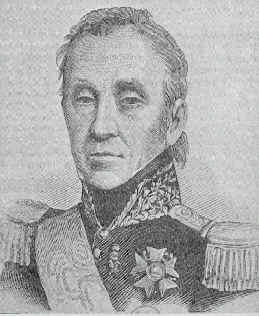 Isidor Excelmans
Pedestal:
Exelmans (front)
1775-1852 (back) Né à Bar-le-Duc. Aide-de-camp et ami de Murat. General 1807. Suivit Murat en Espagne, caplit en Angleterre 1811. General 1812. Marechal 1851 (Born in Bar-le-Duc. Adjutant and friend of Murat. General of campaigns 1807 Followed Murat to Spain, captured in England in 1811. General of the campaign of 1812 Marshal in 1851)
The son of a merchant, an active participant of the French Revolution and Napoleonic wars. He distinguished himself in the battle of 1805 at Wertingen against Austria: three horses were killed under him, but Excelmans broke through to Napoleon and presented him the banners taken from the enemy. Emperor gave him a high appreciation: "It is impossible to be braver than you." In 1813, Excelmans was awarded the title of count. During the "Hundred Days" he actively participated in the restoration of the power of Napoleon, since 1830 - in the July Revolution. He died in 1852 after falling from a horse.
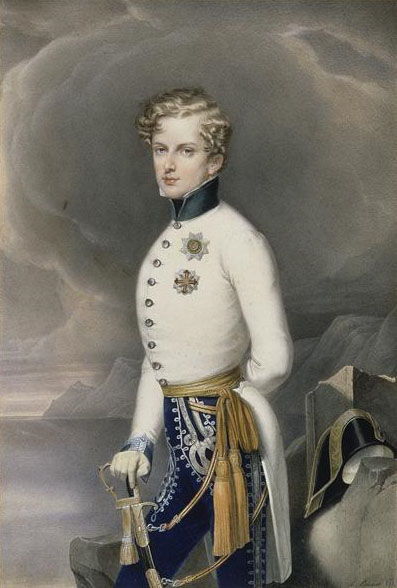
Napoleon II, Duke of Reichstadt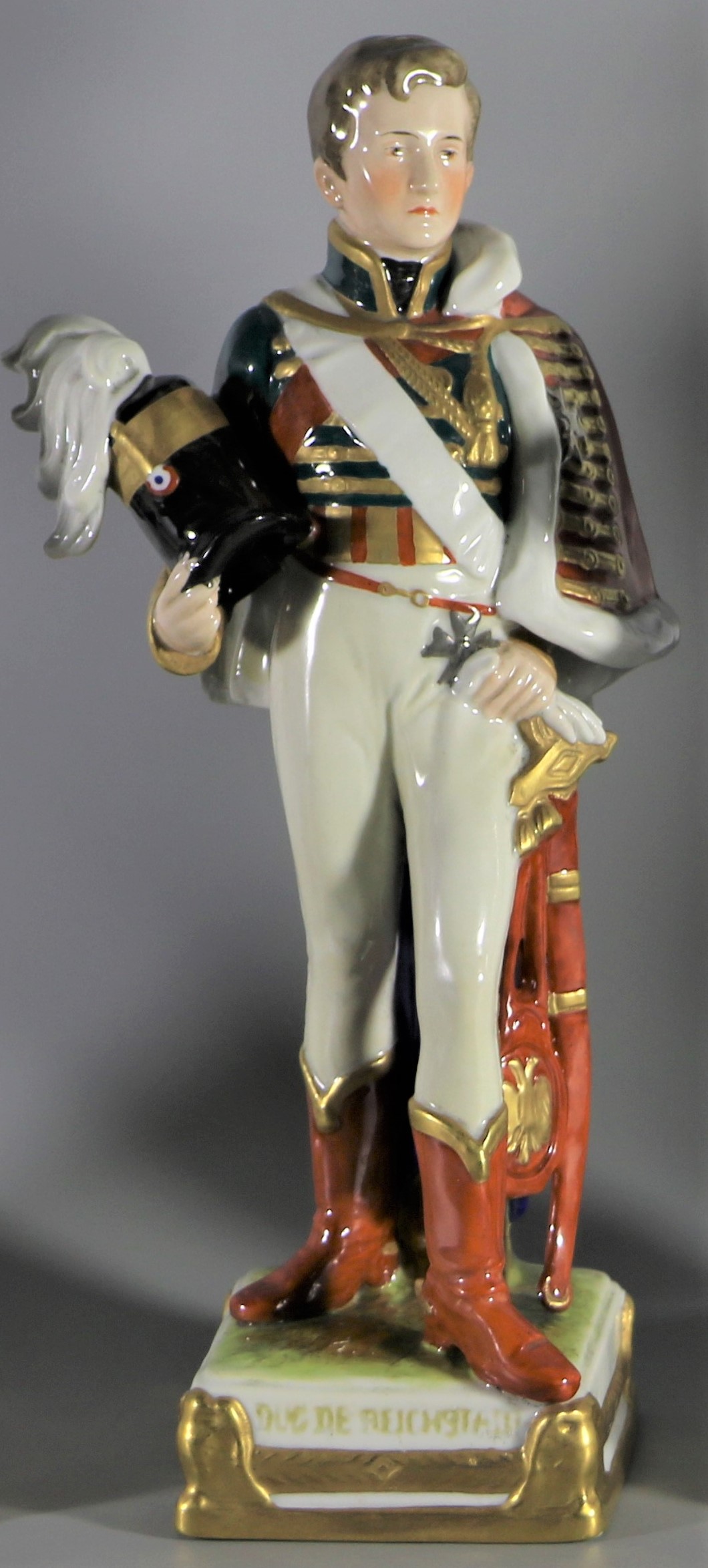
Pedestal:
Duc de Reichstadt (front)
Né à Paris, le 20 Mars 1811 (Born in Paris on March 20, 1811)
François, or Franz, was the only son of Napoleon and Maria Louise of Austria. He wore many titles (King of Rome, Duke of Reichstadt, Prince of Parma), formally even ruled the French Empire in 1815, because after the Battle of Waterloo Napoleon abdicated in favor of his own son (however, he was not recognized). Also, Napoleon II was in the army, even managed to "rise" to the rank of major. The boy spent almost his entire life in Vienna, at the court of the Habsburgs, with the family of his mother. He died in 1832 from tuberculosis.
The figurine of Napoleon's son Bonaparte is not included in the official series "Napoleon and his Warlords" and is a rarity.

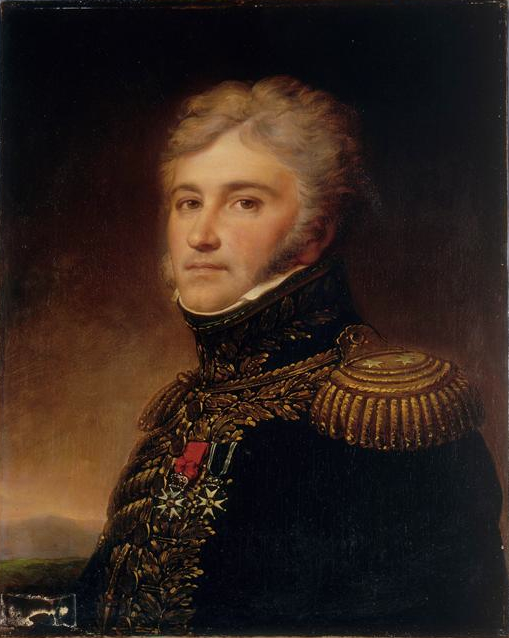 Louis Lepic
Pedestal:
Lepic (front)
1765-1827 (back)
Né à Montpellier. Dragon 1781. Lieutenant-colonel Marengo (14 juin 1800). Major dans la Garde Consulaire. Général de brigade 1807, division 1813 (Born in Montpellier. Dragoon in 1781 Lieutenant colonel after Marengo (June 14, 1800). Major of the Guards. Brigadier general in 1807, division general in 1813)
A boy from a poor family in 16 years enlisted in the French army. The hero of the Battle of Preussisch-Eylau, known as an intelligent, brave and somewhat cautious commander. All his life suffered from arthritis, which did not prevent him, overcoming pain, to go into battle. All his 5 sons also connected their lives with military service. The younger brother of Louis Lepic, Joachim, was also a renowned warrior. General Louis Lepic died at home in 1827.
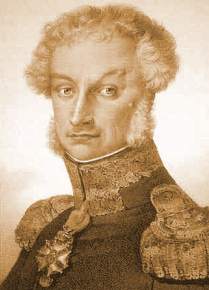
Pierre Jacques Etienne Cambronne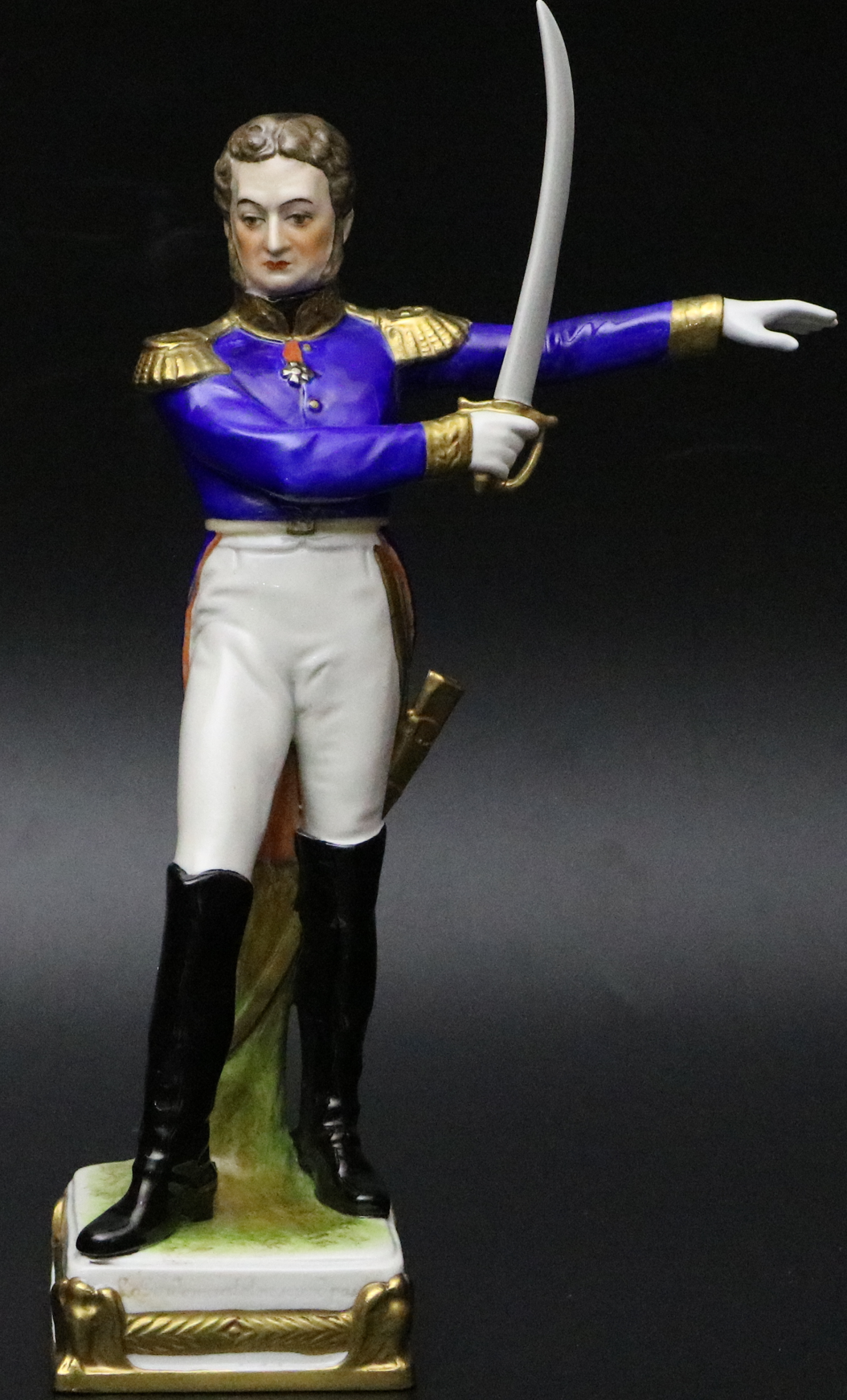
Pedestal:
La Garde meurt, mais ne se rend pas (front)
General Cambronne (back)
Né à Saint-Sébastien. Grenadier en 1792. Général de brigade en 1813. Avec Napoléon a l'ile d'Elba. Sa fière réponse à Waterloo en 1815, immortalis a sa bravoure (Born in San Sebastian. Grenadier in 1792 Brigadier General in 1813 Went with Napoleon to Elba Island. His proud response to the enemy at the Battle of Waterloo in 1815 immortalized his courage)
The son of a merchant, one of the bravest and most loyal generals of Napoleon. Emperor wanted to give him the title "first grenadier of the republic" for his bravery in the battle of Oberhausen (and also because of the death of the previous "first grenadier of the republic"), but Cambronne refused, considering himself unworthy. Successfully led the Saxon campaign in 1813, accompanied Napoleon into exile to the island of Elba in 1815. At the Battle of Waterloo, he did not surrender to the British, uttering the legendary phrase "La Garde meurt, mais ne se rend pas" (The guard dies, but does not surrender). He survived despite being seriously wounded and captured by the British. He died in 1842.
The presented figurine of Cambronne is interesting for two reasons. Firstly, the "non-static" posture of the sculpture of Cambronne itself is extremely rare. Secondly, on the front part of pedestal carved not the name of Cambronne (it is on the bottom and back), but his famous saying "The guard dies, but does not surrender".


