
Black, Starr & Frost
 One of the oldest and most renowned American manufacturers and distributors of jewelry and silver.
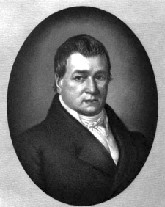
The history of the company began with the American jeweler and watchmaker Isaac Marquand. In 1810, he moved to New York and founded Marquand & Co., as the company changed partners frequently.
.png)
Marquand & Co. were the first to use glass display cases to show their products to passers-by.
.png)
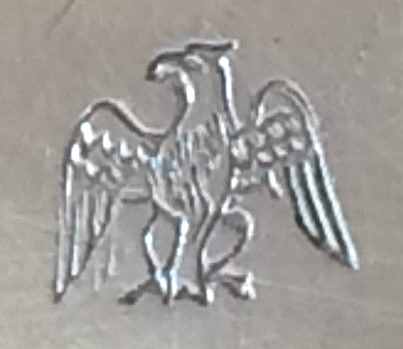
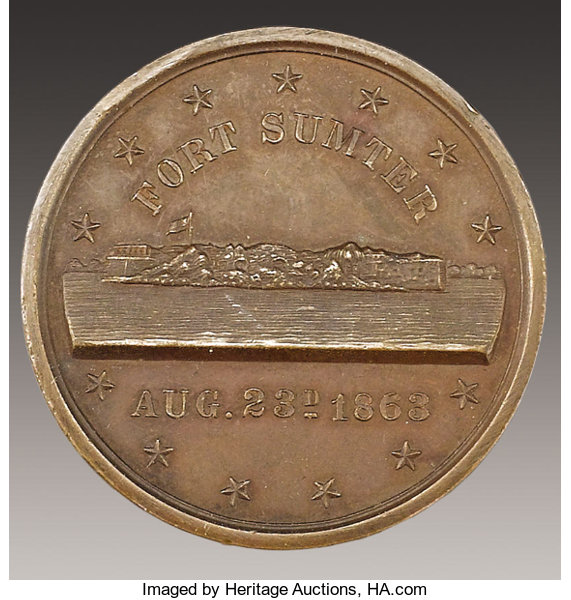
In 1833, the company began to use the American Eagle from the US Coat of Arms as its hallmark. Further, Marquand & Co. (like Black, Starr & Frost) will create products for American government officials and authorities. So, from 1837 to 1909, the company made ceremonial rings (class rings) for graduates of the US Military Academy (US Military Academy): accessories from Black, Starr & Frost adorned the fingers of such prominent personalities like the 18th President of the United States Ulysses S. Grant and Commander-in-Chief of the United States Army Douglas MacArthur. Black, Starr & Frost also created the Gillmore Medal for the U.S. Army (1863), the Kearny Cross Award for Valor in Battle (1863), and the key for the ceremonial opening of the New York Public Library (1911).
In 1851, already under the name Ball, Black & Co., the company was one of the few American manufacturers to be honored to participate in the World's Fair in London (you can read about this event in our article). The company presented a tea set for 4 persons made of pure gold.
In 1839, the company was purchased by its own clerks Henry Ball, Erastus O. Tompkins and William Black and renamed Ball, Tompkins & Black. After 9 years, the company moved its office to Broadway.
In 1860, the company received an order for silver and jewelry worth more than $12,000 from King Edward VII of Great Britain.
Since 1876 the current name of the company, Black, Starr & Frost, has been remainig virtually unchanged.The company was acquired by son of William C. Black Robert C. Black, former cashier and accountant Courtland Starr and manager of the silver division Aaron V. Frost. In 1929 there was a merger with the Gorham Corporation, which until the 1960s was a key partner of Black, Starr & Frost.
In 1915, the company produced the trophy cup for The Astor Cup, the first racing competition. The company also designed and created the award for The Davis Cup, an international men's tennis competition.
.png)
In 1928, the company sold a 127-carat Portuguese Diamond of perfect clarity to the famous American actress Peggy Hopkins Joyce for $ 373,000.
In the middle of the century, Black, Starr & Frost created the "Princeton Mace" for Princeton University ceremonies.
In 1962 Black, Starr & Frost acquired the American subsidiary of Cartier USA.
From the end of the XX century until 2006 the company changed many owners (Marcus & Co, Kay Jewelers, Sterling Inc., Paul Lam), when it was bought by the famous jeweler Alfred Molina, The Molina Group.Black, Starr & Frost moved its headquarters to Phoenix, Arizona. Today the company has showrooms in Newport Beach, California, and Phoenix, Arizona.
.png)
The last grand sale of Black, Starr & Frost came in 2012: the 76-carat "Archduke Joseph" diamond. This absolutely transparent diamond originated from the Indian mine of Golconda (as well as the famous Koh-i-noor diamond).
Archduke Joseph Augustus, the first owner of the stone (it is not known how he received it), on June 1, 1933, deposited it in the Hungarian General Credit Bank. Three years later, the diamond was sold to an unknown person, presumably a European banker, in France, where it was kept in a safe until the 1960s. In 1961 he tried to sell "Archduke Joseph" in London, then in 1993 in Geneva, at Christie's (it was sold for, presumably, $ 6 million).
On November 13, 2012, Black, Starr & Frost sold the diamond at Christie's for more than $20 million (estimated for $15 million), a record sale for a colorless diamond.
Gallery Watel Antik offers you an antique rare silver tea and coffee set by Black, Starr & Frost, made in 1900, weighing 3 kg 900 g, with an exclusive packaging made by our restoration studio Atelier Watel.


