
Лікерний бар, Cave à liqueur
Надзвичайно рідкісний і дорогий аксесуар ... але він, безсумнівно, того вартий!
У всіх мовах лікерний бар прийнято позначати французьким словосполученням cave à liqueur, оскільки саме у Франції він був винайдений, звідти ж поширився і там видозмінювався, а потім і вдосконалювався.
Лікерний бар є компактною «шафкою», всередині якої – дорогий кришталевий сервіз (зазвичай 2-4 графини і кратне числу 4 кількість чарочок – від 8 до 32), зафіксований підставкою під назвою “serviteur”. Їх брали із собою, щоб «прикрасити» своє довге перебування у дорозі.
Перші лікерні бари з'явилися ще наприкінці XVIII століття, але по-справжньому увійшли в моду і стали незамінним аксесуаром буржуазії, що зароджувалася, вже в XIX ст. На початку століття бари були лаконічні в дизайні, маючи лише невеликі вкраплення "маркетрі" (докладніше про цю техніку ви можете прочитати у нашій статті). Епоха Реставрації та Липнева монархія (а це 1815-1848 рр.) породили попит на предмети розкоші серед буржуазії – людей без аристократичного походження, але з грошима.
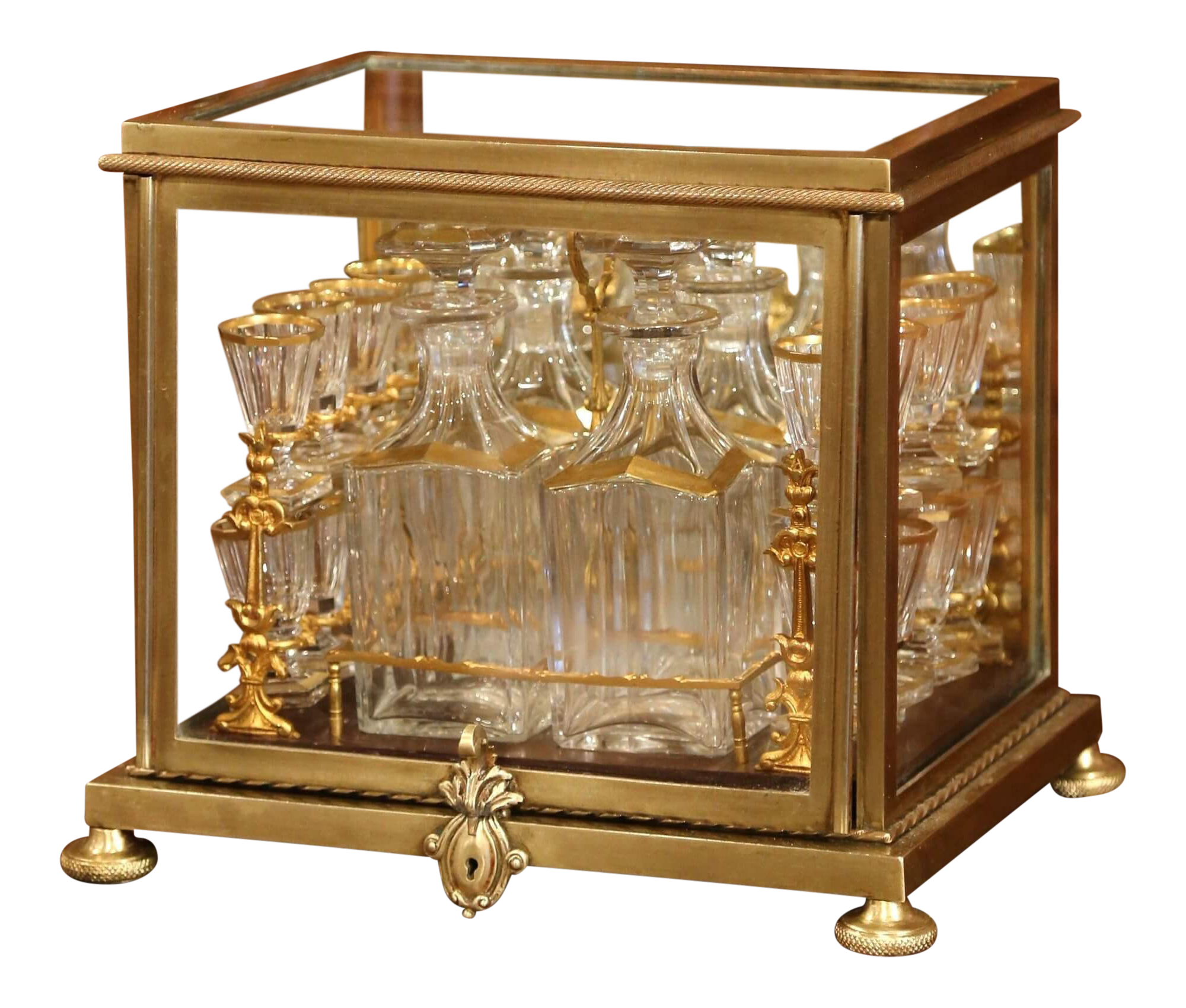
Це, а також скасування цехових правил, дозволило майстрам по дереву відкривати власні ательє і «змагатися» між собою у помпезності та елегантності предметів розкоші. Лікерні бари набували різних форм (овальні, восьмикутні, прямокутні та ін.), їх стали виготовляти з дуже цінних порід дерева, для їх прикрас застосовувалися найрізноманітніші елементи (латунні, золоті, кришталеві, з черепашого панцира або слонової кістки і т.д.), а такі знамениті виробники кришталю як Baccarat, Saint Louis, Clichy та ін. почали виготовляти дивовижні по красі сервізи для лікерних барів. У 1840-х роках. з'явилася також мода на кольорове скло – наприклад, Богемське чи уранове – яке також застосовували під час створення сервізів для лікерних барів. Деякі бари – такі трапляються дуже рідко – були оснащені музичними та іншими механізмами (наприклад, обертовими). Знаменитими виробниками лікерних барів на той час були Tahan, Alphonse Giroux, Théodore Aimée, Diehl.
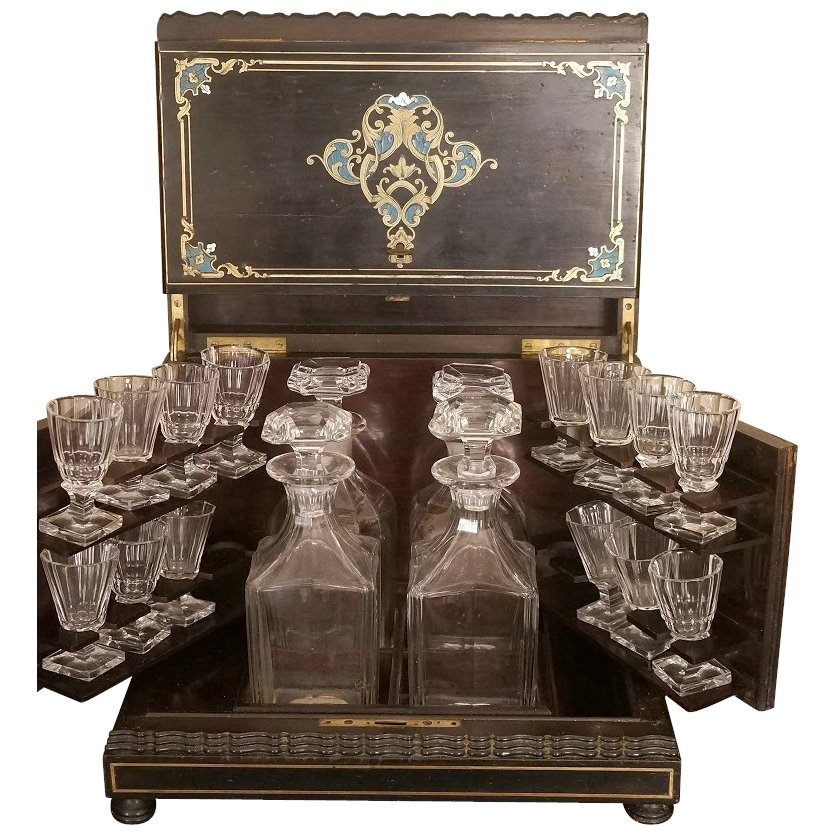
Однак ближче до 1900 р. і надалі поширеність і, відповідно, обсяги виготовлення лікерних барів пішли на спад. Початок ХХ століття ознаменувався інтенсивними процесами механізації (так, наприклад, 1914 вважається роком «народження» конвеєрного виробництва – у сучасному його розумінні – на заводі Генрі Форда): тепер те, що раніше виконував один майстер, розподілялося між іншими фахівцями – скульпторами, лакувальниками, теслями та ін. Та навіть не дивлячись на це, процес створення лікерного бару залишався дорогим. У 1920-1930-х роках. Baccarat випустили спрощений варіант бару для прогулянок на яхтах у вигляді переносного кофра з трьома графинами і склянками.
Слід трохи поговорити про алкоголь – власне те, для чого ці бари і призначалися. По-перше, в англійській мові є два дуже схожі терміни, що позначають спиртні напої – liquor та liqueur. Liquor відноситься до міцних напоїв на спиртовій основі, несолодким, що піддаються дистиляції (наприклад, джин або віскі). Liqueur – що зберігаються в cave à liqueur – це ферментовані солодкі, слабші, спиртні напої (бренді чи лікери). По-друге, не можна не згадати про нововведення у споживанні алкоголю у Франції. У XIX столітті французи стали віддавати перевагу солодким винам, фруктовим бренді, а також лікерам на основі трав і фруктів. На середину ХІХ століття популярність саме лікерів зросла до небес. До 1840-х років лікери вироблялися, в основному, вдома, на основі бренді та садових фруктів. Вони виходили дуже солодкими і тому високо цінувалися жінками навіть більше, ніж солодкі вина. Одночасно з успіхом лікерних барів лікери стали вироблятися у промислових масштабах. З'явилися знамениті марки фруктових лікерів: la Crème de cassis Lejay-Lagoutte (1841), Cointreau (1849), Lapostolle (до 1827, а з 1871 – "Grand Marnier"), la Chartreuse jaune (1838), la Bénédice).
Із середини XIX до початку XX ст. в Англії були популярні свої варіанти cave à liqueur під назвою тантал, призначені для міцного алкоголю, liquor. Тантал являв собою відкриту дерев'яну стійку на 3, рідше 2, кришталевих графини. Ручка, фурнітура та декоративні вставки були металевими. Найпомітніша риса танталу – замок, що фіксував пляшки: він запобігав крадіжці дорогоцінного спиртного. Бачиш перед собою 2 або 3 сорти приголомшливого віскі в кришталевих графинах, а взяти не можеш, бо під замком...
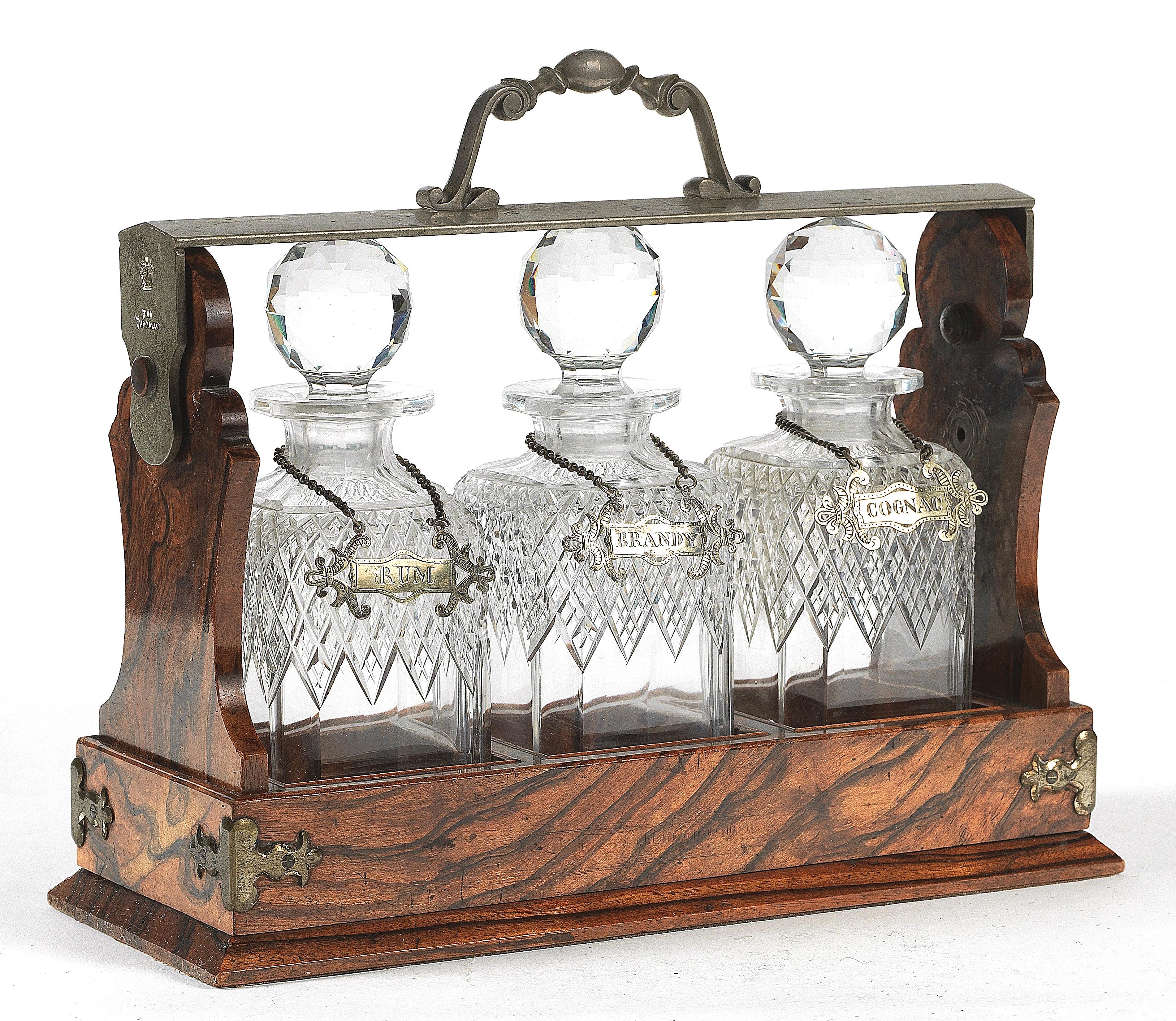
У давньогрецькій міфології Тантал - фригійський цар, дуже близький до богів Олімпу. За найпоширенішою версією міфу він, бажаючи випробувати всезнання богів, убив свого сина, приготував його і подав на вечерю богам, але його задум був розкритий (проте богиня родючості Деметра випадково скуштувала плече сина Тантала). За таку зухвалість цар був приречений на вічні муки від голоду і спраги в Аїді: стоячи по коліна у воді, він не зміг сьорбнути її, і, бачачи перед собою соковиті фрукти, не міг їх скуштувати. Саме тому англійський бар і отримав свою назву "тантал".
Наша галерея представляє вашій увазі кілька антикварних лікёрних барів різних періодів та виробників, які підтверджені атрибуцією французьких аукціонних домів.


